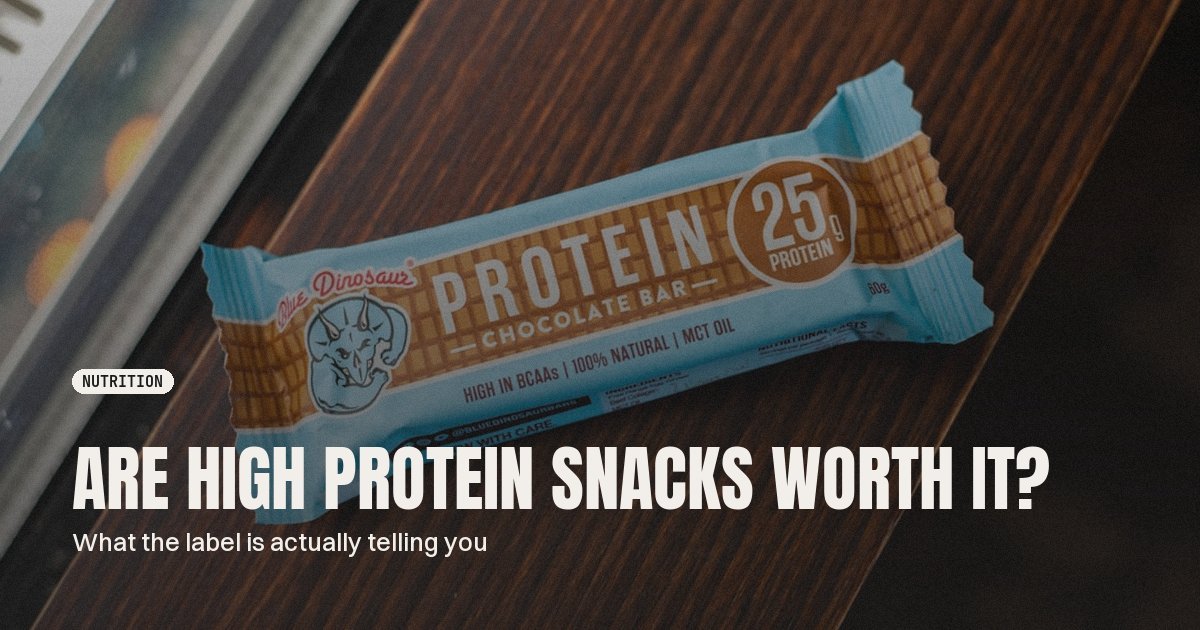
Walk down any supermarket aisle and the word protein is on everything now: bars, yoghurts, cereals, flapjacks, even bread and breakfast biscuits. When you see it, you probably assume two things without thinking about either, that there’s a meaningful amount in there and that it’s decent-quality protein. Most of us never check. You’re busy, the packet says protein, protein’s the thing you’re meant to be eating, so in the basket it goes. These high protein snacks usually cost a bit more than the standard version, and the extra cost only adds to the sense that you’ve made the better choice.
I’m not going to tell you off for any of that. I like a protein snack as much as the next person, I keep them in the house and eat them myself, and a good one is among the easiest ways to get protein in when you’re short on time. The trouble is that a lot of the products trading on the word have stopped living up to it, and some were never worth it in the first place.
How High Protein Snacks Got Worse
A protein bar used to be a straightforward thing: a chocolate bar with a decent slug of protein added, around 20 to 25 grams, for roughly 200 to 250 calories. That’s a useful snack and a fair one to recommend.
Over the last few years the word has spread to products carrying far less. A bar calling itself high protein today might give you 9 to 15 grams for the same 200-odd calories. Same wrapper and the same price, for half the protein. The ones I buy from Lidl used to be 20 grams a bar and recently dropped to 15, which doesn’t sound like much until you realise it means eating two of them, and double the calories, to get what one used to give me.
Part of how products get away with this is that "high protein" is a looser term than it sounds. To put it on the front of a pack in the UK, a product only needs to get about 20% of its calories from protein, per the retained EU regulation on nutrition claims. On a low-calorie snack that can work out as very little protein in real terms, which is how something with a single-figure protein count still earns the label you’re trusting.
To be fair, some are still good. A Grenade bar gets you to around 20 grams, and there are others like it. But plenty don’t come close. Weetabix Protein, for one, adds only a couple of grams over the standard version, and a lot of protein yoghurts and snack bites do the same: a token amount, with the label doing the heavy lifting.
Small Doses Barely Register
Your muscles are constantly being broken down and rebuilt, and to tip that balance towards building, or even just holding on to what you’ve got, you have to give them a big enough hit of protein in one go. A trickle of small amounts through the day doesn’t do the same job as one proper feed, even when the grams add up to the same total by bedtime.
Below a certain amount, you’ve eaten protein and it isn’t wasted, but you haven’t really switched on the rebuilding response the way a full feed does. For most adults that point sits around 25 to 30 grams of good-quality protein in a single sitting, per the Schoenfeld and Aragon review of per-meal protein dosing. It’s a bit like trying to heat a room with a candle: you’re adding warmth, technically, but never enough at once to change the temperature in a way you’d actually notice.
Quality plays in here too. The protein in foods like meat, dairy, eggs and whey crosses that line more easily than the protein in most plant-based snacks, which need a bigger serving to match it. For most people grabbing a bar on the way home, though, it’s the amount that lets them down.
This is why a 9-gram snack barely registers for your muscles. A while back a client told me he’d had a protein flapjack, one of the Trek ones, reckoning that was his protein sorted for that part of the day. They’re about 9 grams each. I told him the flapjack itself was fine, but that one barely counts as a feed, and he’d need two, probably three, to get anywhere useful. He’s trying to build muscle and had the calories to spare, so no harm done. If he’d been trying to lose fat while still getting enough protein, eating three flapjacks’ worth of calories to land one real feed would’ve been a daft use of them.
What Actually Counts as a High Protein Snack?
So what should you look for? A snack worth the name gives you a real amount of protein in one serving, enough that you aren’t relying on eating three of them to make it count. As a rough rule, aim for at least 15 grams from a decent source, and treat anything in single figures as a biscuit with good PR.
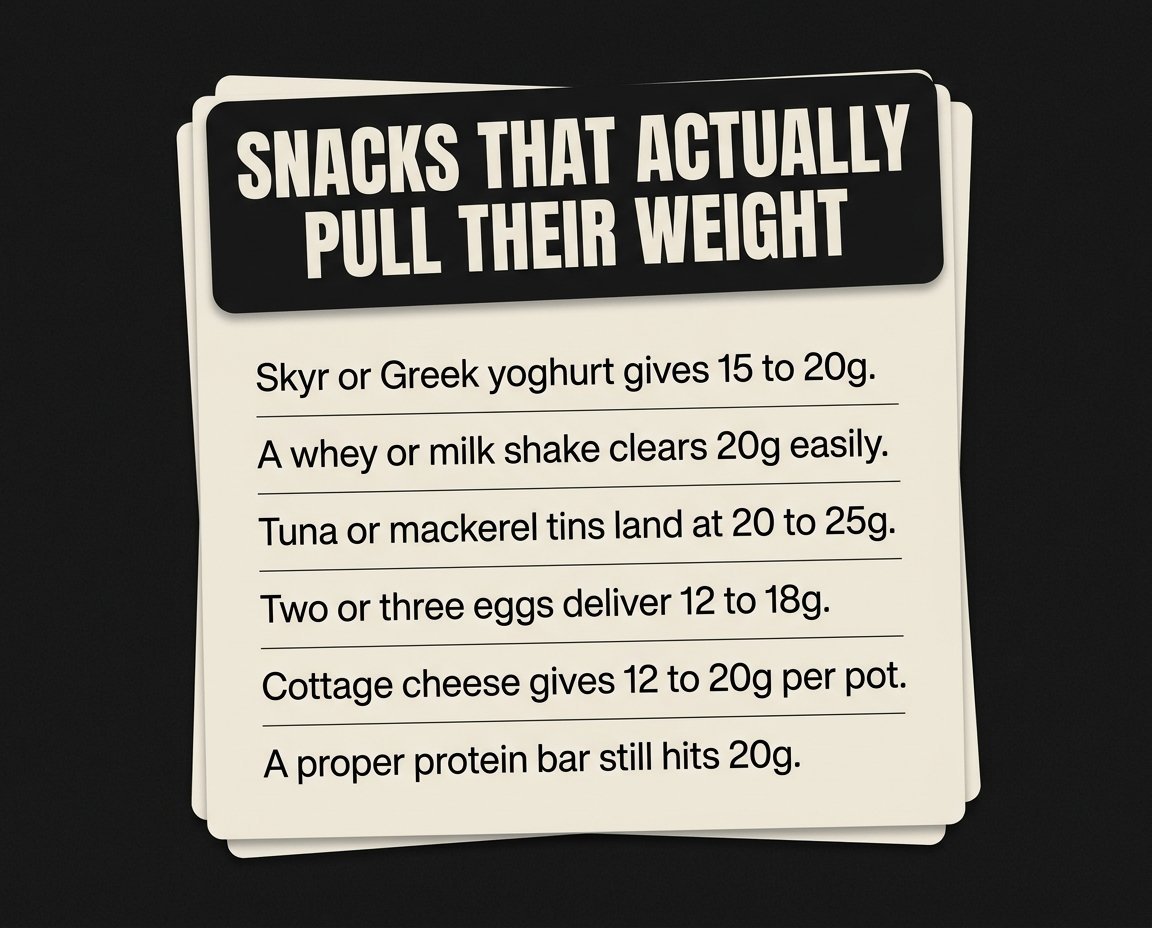
A few that genuinely pull their weight, with the underlying case for the target in the full guide to protein:
- A tub of skyr or Greek yoghurt, around 15 to 20 grams
- A whey or milk protein shake, 20 to 25 grams
- A tin of tuna or mackerel, 20 to 25 grams
- Two or three eggs, 12 to 18 grams
- A pot of cottage cheese, 12 to 20 grams
- A proper protein bar, the sort that still carries 20 grams rather than 9
Most of those don’t even have the word protein on the front, which is usually the giveaway that they don’t need it.
The Convenience That Isn’t
The whole appeal of these products is convenience. Grab one and your protein’s sorted. That holds up if the bar delivers a proper dose. When it only gives you a fraction of a feed, you end up getting through three or four little packets, plus the money and calories that come with them, to do the job one real portion would have done.
You might reasonably say that what matters most is your total protein across the day, and you’d be right. Total intake is the single biggest factor. But you can hit a solid daily total far more easily, and more cheaply, by building around a few decent meals with a couple of the snacks above, rather than relying on whatever’s been marketed at you. You lose more by buying the marketed version than by skipping it: worse results, more money, and less of the convenience it promised.
None of this makes high protein snacks a write-off. A good one still earns its place in my week. It just means the claim on the front is close to meaningless on its own, and the only part worth reading is the protein figure on the back, ideally before the thing’s already in your basket.
If you want a way of eating that’s simple to stick to and doesn’t hinge on decoding every label in the shop, that’s what I help clients with one to one.