When it comes to meal timing, I see clients across the full spectrum. Some eat seven times a day, others just once.
It’s understandable why. There are plenty of opinions out there, and social media is littered with timing-specific rules: eat within 30 minutes of training, skip breakfast, a six to eight-hour eating window, don’t eat after 8pm, one meal a day.
But my answer is almost always the same: for most people, it doesn’t matter. And worrying about it tends to get in the way of the things that do.
Circadian Eating Is Real
There’s something to it. Your body processes sugar differently depending on the time of day. Morris and colleagues (2015) showed that the body tolerates glucose better in the morning than in the evening, and because of this, some researchers have suggested you should eat more of your carbs earlier in the day. There’s also decent evidence that spreading your protein across meals rather than loading most of it into dinner produces a better muscle-building response across the day (Mamerow et al. 2014). For the daily protein totals to aim for, see our practical guide to protein.
These are real findings, but they have a context that tends to get lost in how they’re applied.
Fine-Tuning Meal Timing Is a Third-Step Problem
Meal timing can be a useful thing to consider for people who’ve already done the heavier work. They’re consistently hitting their calorie target calorie deficit, eating enough protein every day, and training with enough volume and regularity that optimising at the margins actually has something to work with. For those people, spreading protein a bit more evenly across the day might get a little more from their training.
But the people who worry most about meal timing are almost never in that group.
What I see instead is people running long eating windows because they’ve read about intermittent fasting, ending up with 80g of protein instead of 160g because they’ve compressed the time they have to eat. Or people skipping breakfast and then training in the afternoon feeling rough. I had a new client earlier this year full of ideas about intermittent fasting she’d picked up from podcasts, but she hadn’t even heard of the idea of maintenance calories.
Timing has become a way to feel productive before the basics are actually sorted.
Fasting Makes Practically No Difference
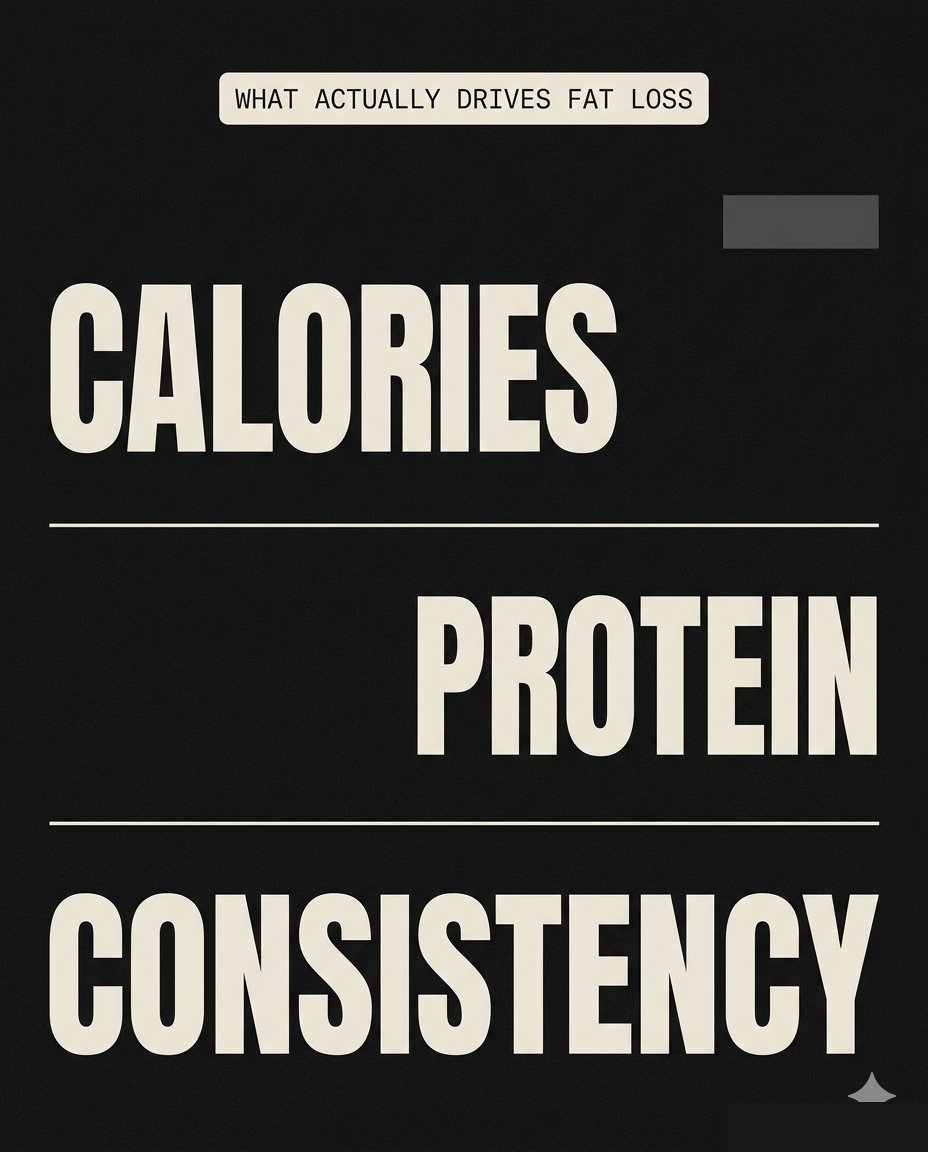
When researchers have compared intermittent fasting against regular eating at the same total calories, the findings are consistent: there’s no meaningful difference in fat loss (Lowe et al. 2020; Cioffi et al. 2018).
When people do lose more weight on intermittent fasting, it’s almost always because the eating window makes it easier to eat less. That’s what drives fat loss, and it’s the same mechanism that drives every diet that works.
Researchers have also tested the "anabolic window" idea directly: that you need protein within 30 to 45 minutes of training or the session is largely wasted. The window turns out to be hours wide, not 30 minutes, meaning that if you’re eating enough protein across the day, when you eat it around your session barely matters (Aragon and Schoenfeld 2013).
Build Your Schedule Around Your Targets
The only useful question about meal timing is whether your eating schedule makes it easier or harder to hit what actually matters:
- Total calories — does your schedule make hitting your target easier, or harder?
- Daily protein — can you spread it across enough meals to land near your total?
- Training consistency — does your meal timing support training, or sabotage it?
Work backwards from those, not from a protocol someone told you was optimal. That might mean three meals across the day, a smaller eating window, or eating before training because otherwise you can’t train well.
I’ve been coaching for over a decade, and I’ve never had a client fail to make progress because they ate dinner at 7:30pm instead of 6:00pm. The people who stall are the ones who can’t hold a calorie deficit long enough to lose weight, or can’t eat enough protein day-to-day to build muscle. That’s where the real work is. Meal timing is a marginal concern the fitness industry has promoted to a central obsession because it sells protocols, apps, and eating windows.
Get your calories and protein right, train consistently, and the timing will sort itself out.
If you want help getting the fundamentals right without getting lost in the details, contact me below for a free consultation.
Photography: featured on clock surrounded by vegetables.