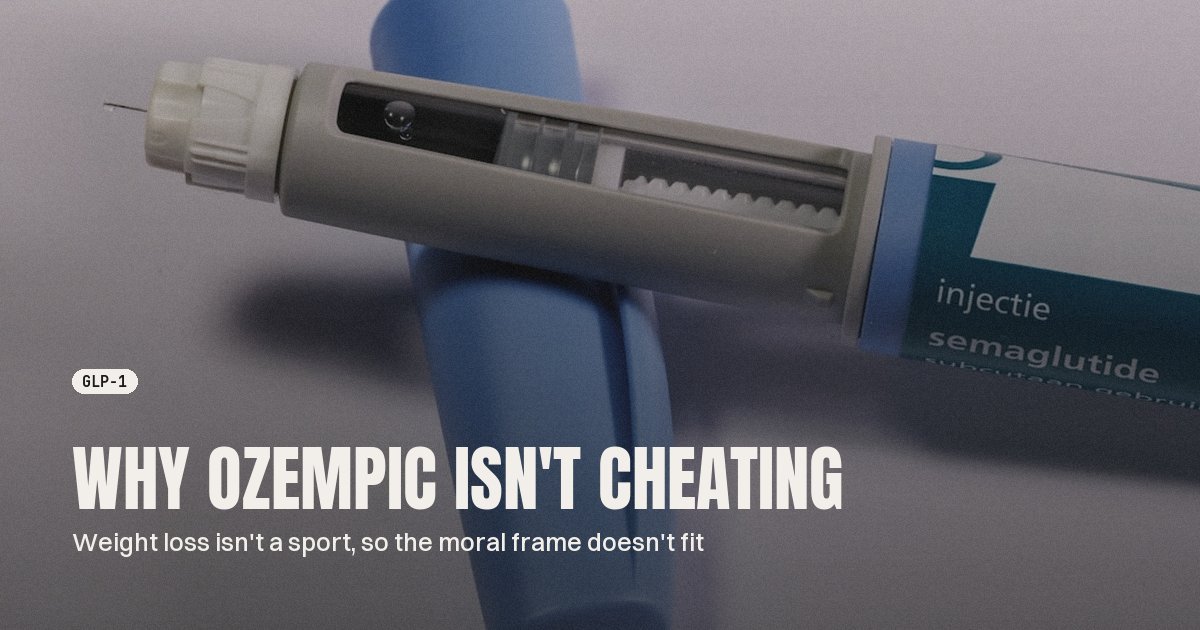
As a fat loss coach, most people expect me to be sceptical of GLP-1 drugs like Ozempic. They expect me to say they’re cheating, or at least a moral compromise. I don’t, and I haven’t for a while.
The longer I’ve coached, the more obvious it’s become that the cheating framing tells you very little about the drugs and quite a lot about the person making the claim. This isn’t an argument that GLP-1s are right for everyone, and they have plenty of tradeoffs. But the moral frame around them, the idea that taking the medication makes you somehow lesser than getting there through diet alone, falls apart the moment you actually look at it.
To answer the title question directly: no, Ozempic isn’t cheating. Cheating only makes sense in a contest with rules, and weight loss is not a contest. The biology of bodyweight does far more work than willpower, the moral framework was always made up, and the rest of this article is the case.
Why Coaches Push the Cheating Argument
You hear the argument in pub conversations and on fitness Twitter, from coaches, influencers, and a fair amount of mainstream commentary. The shape is always the same: real weight loss is supposed to come from discipline, drugs are a shortcut, and people using them haven’t earned their results.
It’s especially loud inside the fitness industry, which makes a certain amount of sense. If your whole coaching offer boils down to helping someone get into a calorie deficit, a drug that makes the deficit easier is bad for your business and bad for your status. There’s a sour-grapes flavour to a lot of the loudest takes, frustration that an option exists now that wasn’t available to people who built their identity on doing it the hard way.
Yes, GLP-1s Do Make Weight Loss Easier
GLP-1s do make weight loss easier than diet alone. The drugs (semaglutide in Ozempic and Wegovy, tirzepatide in Mounjaro) work mostly by reducing appetite and slowing down how quickly your stomach empties, so people eat less without having to white-knuckle through the same hunger they’d face on a deep deficit. That’s straightforwardly easier.
The behavioural side matters too. Long-term weight management depends on building new habits around food, training, sleep, and how you handle stress. The drug doesn’t do that work for you, so someone who takes the medication and changes nothing else is likely to regain the weight when they come off it. That’s a real concern.
The error isn’t in noticing GLP-1s make weight loss easier or that habits still matter, it’s in the leap from there to cheating.
Cheating Only Makes Sense If Weight Loss Is a Sport
Cheating is a sports term. There has to be a contest with rules and someone breaking them to win. Without that, the word doesn’t really mean anything.
Weight loss isn’t a contest. There are no rules and no opponent. If you lose weight by changing your diet, no one else gains weight. If you lose it by taking a drug, no one is wronged.
There’s no game being played that the medication is interfering with. The closest thing to an opponent is your own biology, and biology doesn’t care what tool you use to negotiate with it.
The cheating frame only feels intuitive because the culture has been treating weight loss as a moral proving ground for so long that we forget the moral framework was always made up. Once you ask what game is being cheated, the whole thing falls apart.
Most of the Difference Is Biology
How brutally hungry people get on a calorie deficit varies a lot between people. That much should be obvious to anyone who’s ever dieted alongside a partner or housemate and watched two completely different responses to the same plan. What might be less obvious is how much of that variation is built in.
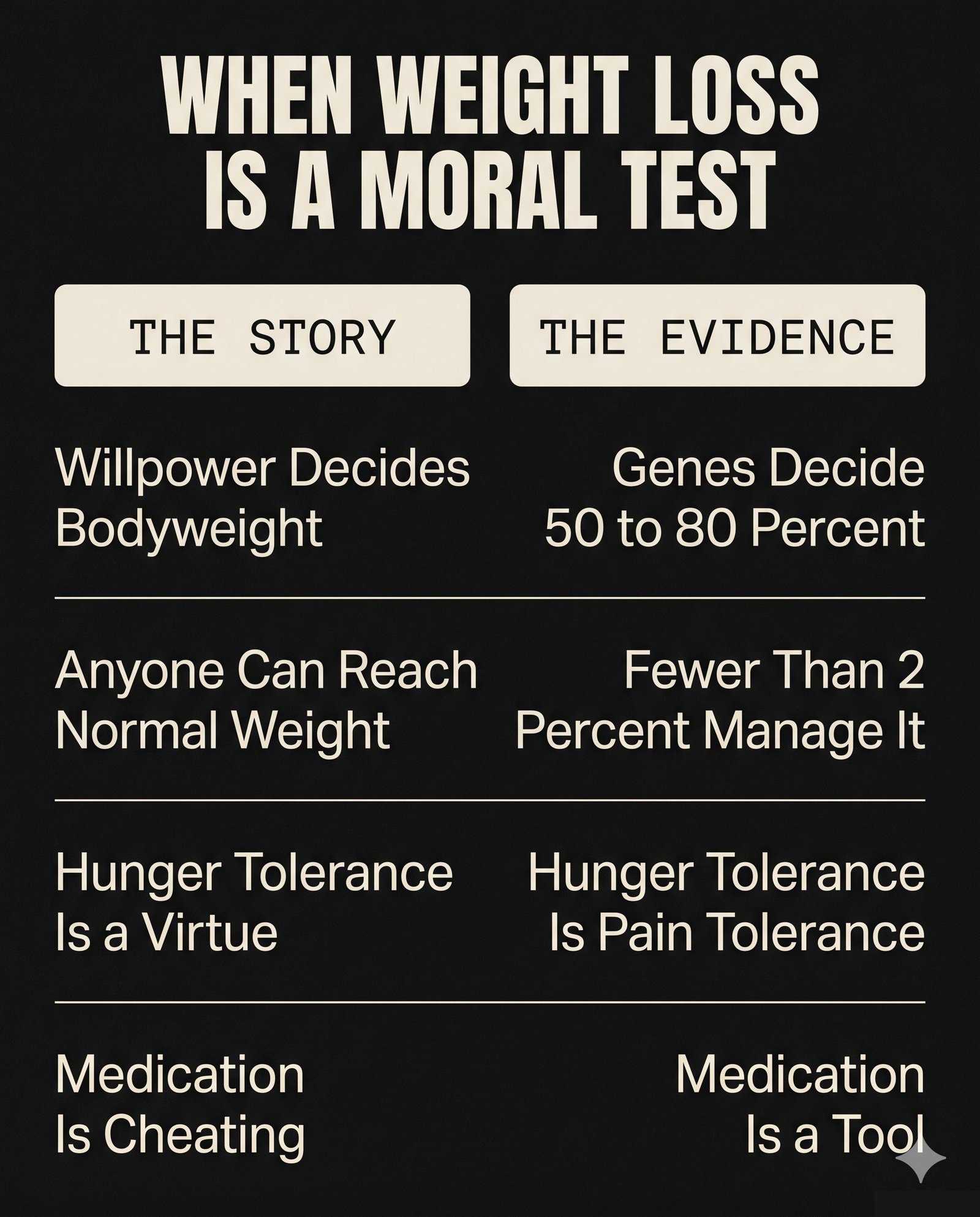
Twin and family studies suggest your genes account for somewhere between 50 and 80 percent of the differences in body weight between people, depending on the population. That’s not the whole story, but it’s a lot more than the culture admits. The story most people are sold is that bodyweight is largely a matter of effort, with biology playing a small supporting role. The evidence has it the other way around.
A 2015 UK study using GP records tracked roughly 279,000 obese adults over up to nine years. In any given year, the odds of one of them reaching normal weight without weight loss surgery were about 1 in 210 for men and 1 in 124 for women at the lower end of obesity. At the morbidly obese end, it dropped to about 1 in 1,290 for men and 1 in 677 for women. Across the whole follow-up period, fewer than 2 percent of the people in the study reached normal weight.
That’s roughly Everest-level rarity. It happens, but it’s nowhere near common, and the people who manage it have a particular combination of biology, time, money and circumstance most people don’t get. The biology piece has a name: the body’s tendency to defend a set point. Calling everyone else morally lesser is grading them on an event most of the judges have never tried to run.
Willpower Isn’t a Moral Signal Anyway
Even if some people can grind through a deep deficit on willpower alone, that doesn’t make them virtuous. Plenty of people with formidable willpower achieve very little of moral consequence, and some are actively not very nice. Willpower is a useful trait, but it doesn’t correlate cleanly with being a good person.
Picture what you’d want said about you at your funeral. Almost certainly things like, he was funny, kind, generous, looked after his people, did good work, was brave when it mattered. Not, he could really tolerate a calorie deficit. If hunger tolerance isn’t in your top twenty moral attributes, why are we treating it like a major character signal in other people?
I got to sub-8 percent body fat once, when I was younger and had more reasons to. The mental toughness it took wasn’t a virtue, it was pain tolerance. You’re hungry constantly, food dominates your thinking, social life narrows, training quality drops, sleep gets weird. The discipline required was mostly about being willing to be miserable for a sustained period, which is a real capacity but a strange one to make a moral case out of.
What I Actually See With GLP-1 Clients
There’s a disconnect between how a lot of coaches and influencers describe GLP-1 users and what I see in the room with the ones I coach.
The version online is people taking the easy way out, who didn’t want it enough, who couldn’t be bothered to do it properly. The version I see is people tracking their food, building new training habits, restructuring their relationship with eating, doing the slow, unglamorous rebuild of routines and identity that any serious change requires. The drug doesn’t do the work for them, it just makes doing it more bearable.
Anyone who’s spent ten minutes with a client coming off a long stretch of severe obesity knows that "easy way out" is the wrong phrase. These are people who’ve spent years being told their bodies were a moral failure, tried and failed a dozen times on advice that wasn’t going to work, and have now opted in to a process that demands a major rebuild of their daily life on top of the side effects of the medication itself.
Is Ozempic Cheating? (And Why It’s the Wrong Question)
If you’re thinking about a GLP-1, the questions worth asking are the clinical and practical ones. Is it appropriate for you, what are the tradeoffs, what coaching or support do you want alongside it, and will you be doing the work that has to happen regardless of what’s in the syringe.
The moral question isn’t one of those. The moral framework around weight loss was always made up, and the version that calls medication cheating is one of the weaker forms of it. The drug is a tool, and tools get judged by whether they work, not by whether using them earns you points in a game nobody else is keeping score of.
Ozempic doesn’t replace the commitment, it just removes some of the misery from carrying it out. The work still has to happen. All that changes is that doing it on a GLP-1 isn’t actively painful for two years straight. The behaviour change that matters on GLP-1s is the same work whether the drug is there or not.
If you’re carrying weight you’ve been told for years was a willpower problem, and you’re starting to suspect it isn’t, I can help you figure out what’s actually going on and what to do about it. You don’t need to be anywhere near my gym for that either, the online coaching covers the same ground through your phone.